
Anúncios
Find out which model wins the remote vs hybrid work debate and how to choose what’s best for you.
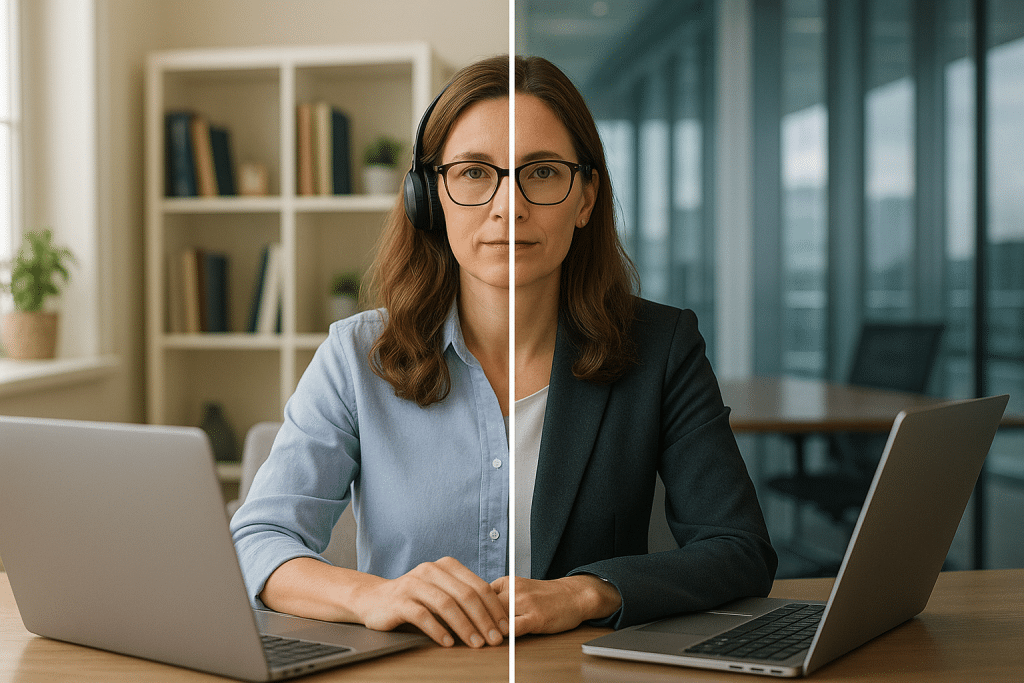
The Future of Work Is Flexible
The way we work has changed forever. What used to be a temporary pandemic adjustment has become a permanent evolution. Today, the conversation isn’t about returning to the office—it’s about finding the right balance between remote vs hybrid work.
Companies and employees are experimenting with flexibility like never before. Some thrive working fully online, while others miss the human connection of office life. The real question isn’t which model is superior—it’s which one helps you perform, grow, and live better.
Understanding the strengths and challenges of each can help you design a career that supports both your goals and well-being.
What Remote Work Really Means
Remote work offers the freedom to perform from anywhere—your home, a café, or even another country. It’s built on trust, autonomy, and technology. For many, it’s not just about skipping the commute—it’s about gaining control over time and energy.
The benefits are obvious: less stress, fewer distractions, and more personal time. However, remote work also brings challenges. Isolation, blurred boundaries, and communication gaps can reduce motivation.
For remote professionals, success depends on structure and discipline. Set boundaries, create a dedicated workspace, and schedule connection time with your team. Balance freedom with accountability, and you’ll make remote work sustainable.
Understanding the Hybrid Model
The hybrid model blends the best of both worlds. Employees split their time between working remotely and at the office. This setup supports flexibility while maintaining collaboration and culture.
In a hybrid environment, workers can enjoy the focus of home days and the teamwork of office days. It encourages creativity, reduces burnout, and allows for better networking.
However, hybrid systems require intentional coordination. Teams must align on communication, meeting schedules, and expectations to avoid confusion. Done right, hybrid work offers both freedom and connection—a powerful combination for productivity.
Comparing Productivity and Performance
The debate of remote vs hybrid work often centers on productivity. Many studies show remote employees get more done due to fewer office interruptions. Yet, hybrid teams tend to innovate faster because collaboration happens face-to-face.
Ultimately, productivity depends on personal habits and company culture. Some professionals thrive in solitude; others draw energy from colleagues.
The best setup is one that aligns with your work style and values. If focus is your strength, remote might win. If teamwork drives you, hybrid could be the key to your success.
Work-Life Balance and Mental Health
One of the greatest benefits of flexible work is improved mental well-being. Remote work allows people to design their day around personal energy levels. You can meditate, exercise, or spend time with family—without sacrificing performance.
Hybrid work provides an additional social boost. Office days help reduce loneliness and increase belonging. However, commuting again—even part-time—can be stressful for some.
Your mental health should guide your choice. Whichever model you pick, prioritize rest, human connection, and boundaries. Balance is what makes work sustainable, not the number of office days.
Career Growth in Flexible Environments
Many professionals fear that remote jobs limit visibility and promotion opportunities. It’s true that in-person presence can create stronger impressions—but performance still speaks louder.
In the remote vs hybrid work landscape, success comes from visibility through results. Communicate wins, set clear goals, and engage actively with your team.
Hybrid setups may offer faster access to mentorship and leadership roles. Still, remote professionals who build strong digital networks and maintain consistency often rise just as quickly. Growth is no longer tied to location—it’s tied to impact.
The Technology Behind the Flexibility
None of these models would exist without technology. Collaboration platforms, cloud systems, and AI tools make remote vs hybrid work possible and efficient.
Mastering digital communication is now a core professional skill. Tools like Zoom, Slack, and Notion keep teams synchronized. AI-powered assistants automate scheduling and reporting, giving workers more time for creativity and strategy.
Staying ahead means being tech-adaptive. Learn how to use your company’s tools effectively and explore new ones that simplify your routine. The future belongs to professionals who can merge human and digital intelligence seamlessly.
The Employer’s Perspective
Companies have discovered that flexibility boosts retention and reduces costs. Remote work eliminates overhead, while hybrid models improve collaboration and morale.
However, the challenge for employers is maintaining culture and equity. It’s easy for remote workers to feel left out of key decisions or career paths. Successful companies prioritize inclusion, no matter where employees sit.
Forward-thinking organizations are now redesigning workspaces, offering stipends for home offices, and building digital-first communication strategies. When both company and employee adapt, everyone wins in the remote vs hybrid work balance.
How to Decide What Works for You
Choosing between remote and hybrid work depends on your lifestyle, goals, and values. Ask yourself:
- – Do I need structure or freedom to stay productive?
- – Do I feel energized by people or quiet focus?
- – How does my role benefit from face-to-face interaction?
If autonomy and flexibility fuel you, remote might be best. If you crave collaboration and mentorship, hybrid may suit you more. The goal is to align your work model with your personality, not trends.
Remember—this choice is not permanent. The beauty of modern work is adaptability. You can redefine your rhythm as your career and life evolve.
Building Long-Term Flexibility
Whether you choose remote or hybrid, adaptability will be your strongest skill. The future workplace will continue to evolve, introducing new structures and digital innovations.
To stay ahead, focus on learning, digital skills, and communication. Stay curious about emerging tools and new ways to collaborate. Flexibility is no longer a perk—it’s the foundation of career success.
By approaching remote vs hybrid work with openness and awareness, you can design a professional life that supports both performance and peace of mind.
Final Thoughts
There’s no universal answer to what’s better—remote vs hybrid work depends on who you are and what you value.
The real success lies in choosing a model that aligns with your energy, creativity, and well-being. Embrace flexibility as your advantage.
Work is no longer a place—it’s a design. Build yours intentionally, and the future of work will work for you.